


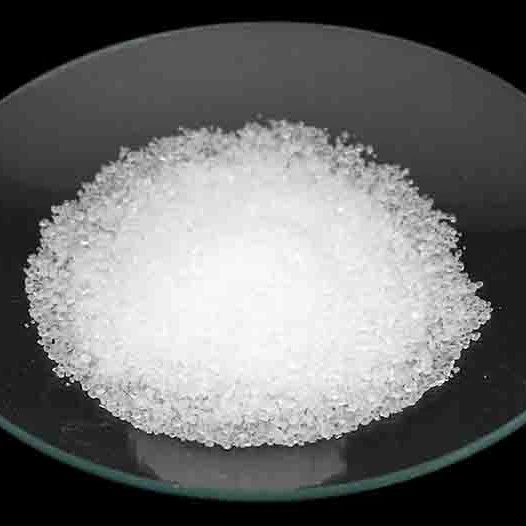
Food Grade Citric Acid is supplied as Citric Acid Anhydrous or Citric Acid Monohydrate for food and beverage formulations requiring acidity adjustment. Both forms are available in crystalline form, with different moisture contents and particle-size ranges for formulation and processing requirements.
Product Identification & Specification
|
Item |
Citric Acid Monohydrate |
Citric Acid Anhydrous |
|
Grade |
Food Grade |
Food Grade |
|
CAS No. |
5949-29-1 |
77-92-9 |
|
HS Code |
29181400 |
29181400 |
|
Appearance |
Colorless or white crystal |
Colorless or white crystal |
|
Clarity & Colour of Solution |
Pass test |
Pass test |
|
Purity |
99.5–101.0% |
99.5–101.0% |
|
Moisture |
7.5–8.8% |
<1.0% |
|
Sulphated Ash |
≤0.05% |
≤0.05% |
|
Sulphate |
≤150 ppm |
≤150 ppm |
|
Oxalic Acid |
≤100 ppm |
≤100 ppm |
|
Heavy Metals |
≤5 ppm |
≤5 ppm |
|
Readily Carbonisable Substances |
Pass test |
Pass test |
|
Bacterial Endotoxin |
≤0.5 IU/mg |
≤0.5 IU/mg |
|
Aluminium |
≤0.2 ppm |
≤0.2 ppm |
|
Lead |
≤0.5 ppm |
≤0.5 ppm |
|
Arsenic |
≤1 ppm |
≤1 ppm |
|
Mercury |
≤1 ppm |
≤1 ppm |
|
Mesh |
8–80 mesh |
30–100 mesh |
|
Food Standard |
FCC / E330 |
FCC / E330 |
|
Packaging |
25 kg/bag or as requested |
25 kg/bag or as requested |
|
Shelf Life |
36 months |
36 months |
Applications by Food Category
Beverage Formulation: Acts as a primary acidulant and tartness enhancer in carbonated soft drinks, juices, and powdered drink mixes.
Confectionery & Jams: Adjusts pH levels to optimize gel setting in pectin-based jams, jellies, and chewy candies while balancing sweetness.
Preservation & Canned Goods: Used for pH adjustment and acidity control in canned vegetables, sauces and other processed foods. Its chelating properties can also support product stability in selected formulations.
Dairy & Frozen Foods: Used for acidity adjustment in selected processed dairy products and frozen food formulations where controlled pH is required.
Anhydrous & Monohydrate Options
Anhydrous Selection: Contains less crystal water and is suitable for dry blends and formulations where lower moisture content is required.
Monohydrate Selection: Contains one molecule of crystallization water and is widely used in general food and beverage formulations.
Granulation Differences: Available particle-size ranges differ by product form and specification. Particle size can be selected according to blending, handling and dissolution requirements.
Application Matching: Selection depends on the target formulation's water activity requirements and mixing dynamics.
Food-Grade Standard & Market Compliance
Standards & Compliance: Product specifications can be supplied against applicable food, pharmacopoeial or customer-specific requirements. Supporting documentation, including COA, can be provided for commercial orders.
Trace Element Governance: Production protocols apply strict purification limits to prevent toxic residue accumulation, ensuring heavy metals remain safely below regulatory thresholds.
Inorganic Residue Management: Controlled calcination processes minimize mineral ash and secondary organic acid remnants, safeguarding final product clarity and taste profile.
Batch Purity Assurance: Every production run undergoes rigorous microbiological screening to guarantee biological safety and stability prior to commercial release.
Bulk Packaging & Export Supply
Supply Reliability: Backed by over 35 years of manufacturing and international export experience serving industrial food processing plants.
Export Packaging: Standardized 25 kg multi-layer paper or plastic woven bags protect the hygroscopic crystalline structure from atmospheric moisture during transit.
Palletization & Shipping: Containerized shipments are packed securely to withstand international freight handling and prevent bag tearing or caking.
Documentation Support: Each shipment is accompanied by a Certificate of Analysis (COA) detailing exact batch purity, moisture, and impurity metrics.


FAQ
Hot Tags: food acidity regulators citric acid, China food acidity regulators citric acid manufacturers, suppliers, factory, 8 40 Mesh Citric Acid Monohydrate, Bulk Potassium Citrate, Potassium Citrate, Trisodium Citrate, Trisodium Citrate food additive, trisodium citrate powder