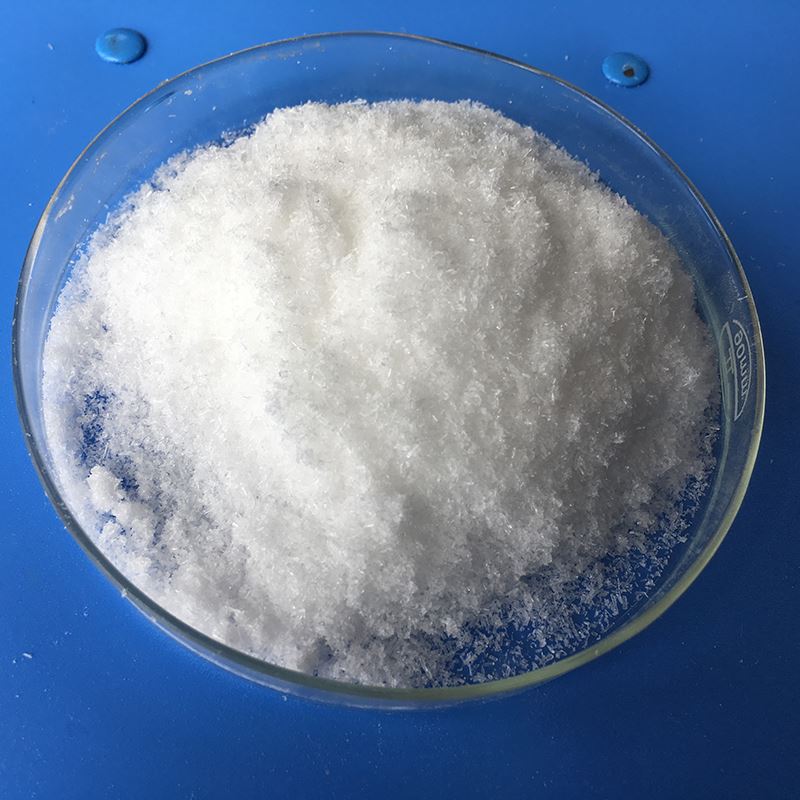

Food Grade Sodium Citrate is a trisodium salt of citric acid, commonly supplied as white crystalline powder or granules. It is used as an acidity regulator, buffering agent, emulsifying salt and sequestrant in beverages, dairy products, processed cheese, sauces and other food formulations.
Product Specification
|
Item |
Specification |
|
Product Name |
Food Grade Sodium Citrate |
|
Chemical Name |
Trisodium Citrate Dihydrate |
|
Formula |
C₆H₅Na₃O₇·2H₂O |
|
Molecular Weight |
294.10 |
|
CAS No. |
6132-04-3 / 68-04-2 |
|
EINECS No. |
200-675-3 |
|
Appearance |
White or colorless crystalline granules or powder |
|
Odor |
Odorless |
|
Taste |
Salty, cooling taste |
|
pH (5% aqueous solution) |
7.5–9.0 |
|
Assay |
99.0–100.5% |
|
Light Transmittance |
≥95.0% |
|
Moisture |
10.0–13.0% |
|
Readily Carbonizable Substances |
≤1.0% |
|
Sulphate |
≤0.01% |
|
Chloride |
≤0.005% |
|
Oxalate |
≤0.01% |
|
Calcium Salt |
≤0.02% |
|
Iron Salt |
≤5 mg/kg |
|
Arsenic |
≤1 mg/kg |
|
Lead |
≤2 mg/kg |
Key Functional Properties
Acidity Regulation: Sodium citrate is used to adjust acidity in food and beverage formulations where controlled pH is required.
Buffering: It works with citric acid to form a citrate buffer system for maintaining a defined pH range during formulation and processing.
Emulsifying Salt: In processed cheese, sodium citrate helps manage the interaction between casein, calcium and the fat-water system during heating.
Sequestration: Citrate ions bind certain metal ions, making sodium citrate suitable for formulations where control of mineral ions is required.
Water Solubility: The product is soluble in water, supporting its use in liquid foods, beverages and aqueous processing systems.
Buffering & pH Control
Citrate Buffer System: Sodium citrate can be combined with citric acid to establish a citrate buffer system. The ratio of the two components can be adjusted according to the required formulation pH.
Slightly Alkaline Solution: A 5% aqueous solution has a pH of 7.5–9.0, providing a measurable basis for formulation and incoming-material checks.
PH Verification: For bulk purchasing, buyers can specify the required pH test concentration and test method to keep supplier and internal QC results comparable.
Applications by Food Category
Cheese Processing: Operates as an emulsifying salt in processed cheese manufacturing, preventing fat separation and allowing uniform melting without greasiness.
Beverage Manufacturing: Serves as a flavor enhancer and stabilizer in soft drinks, juices, and liquid nutritional formulations.
Sauces & Dressings: Used in sauces, dressings and similar formulated foods where acidity needs to be controlled.
Industrial Fermentation: Utilized within bacterial growth media to support controlled microbial environments during fermentation processes.
Formulation Considerations
Hydrate Form: This product is trisodium citrate dihydrate. Its molecular weight is 294.10, so dosage calculations should use the correct hydrate form.
Moisture Content: The specified moisture is 10.0–13.0%. Buyers comparing products from different suppliers should confirm whether the quoted specification refers to dihydrate or anhydrous material.
Physical Form: The product is supplied as crystalline granules or powder. Particle-size requirements should be confirmed when the production process involves dry blending, automatic feeding or controlled dissolution.
Sodium Intake: Sodium citrate contributes sodium to the finished food, so its use level should be included when calculating total sodium content and nutrition information.
Food Safety & Compliance
Heavy Metal Limits: Conforms to strict purity thresholds, capping arsenic at 1 mg/kg, lead at 2 mg/kg, and iron salts at 5 mg/kg to satisfy food safety laws.
Statutory Export Inspection: Subject to official CIQ statutory inspection and testing prior to release, verifying compliance with national export standards.
Organic Purity Standards: Limits readily carbonisable substances to 1.0% maximum, ensuring the absence of unreacted residues for safe ingestion in commercial food applications.


FAQ
Hot Tags: food grade sodium citrate, China food grade sodium citrate manufacturers, suppliers, factory, 30 100 Mesh Citric Acid Anhydrous, 8 40 Mesh Citric Acid Monohydrate, Food Acidity Regulators Citric Acid, Food Grade Potassium Citrate, Glacial Acetic Acid Food Grade, trisodium citrate 2 hydrate